by Jannes Neumann
Tony Segal, † 02 May 2026
Dr. Anthony Maurice Segal
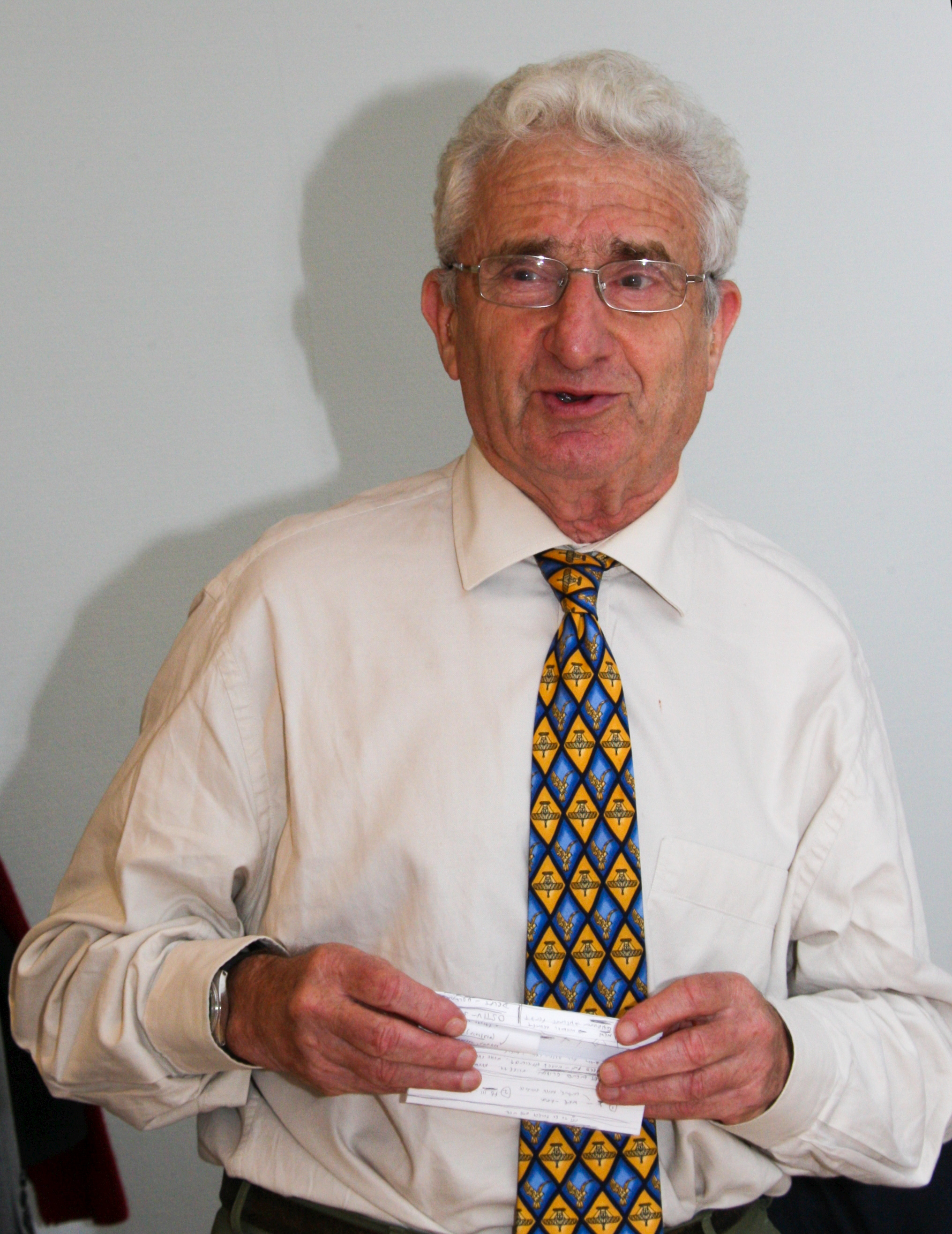
MB BS, FRAeS, DAvMED, Hon Fellow Brunel University
Tony Segal was a lifelong flying enthusiast. He flew both gliders and light aircraft. He qualified as a medical doctor in 1956 and worked in this profession until retirement in the early 1990s. On retirement he completed the Diploma course in advanced aviation medicine at the Royal Air Force Institute of Aviation Medicine, Farnborough.
In 1987 Tony left a mark with his presentation "Pilot Safety and Spinal Injury" at the XX OSTIV Congress at Benalla, Australia. From then on, as a private individual, he conducted research and published papers on energy absorbing seat cushions, seat harnesses, safety seating, and ergonomic and crashworthy cockpit design. At the research facilities in Farnborough and Bicester he undertook numerous dynamic tests of seat cushions and safety harnesses, and full scale drop tests of gliders. Due to the excellent measurement equipment and instrumented manikins available at these research facilities pioneering reports containing solid data have been published since the late 1980s.
He brought these important issues to the attention of the broader gliding community, as he regularly discussed these in popular publications such as Sailplane and Gliding, Technical Soaring, or Gliding and Motorgliding International.
Through his contributions to OSTIV Congresses and in OSTIV's Sailplane Development Panel he influenced further developments of the airworthiness requirements in general, and sailplane cockpit designs such as the visionary ASW24 cockpit in particular.
At his home airfield Lasham, he once had witnessed an ASK‑13 strike the runway hard, injuring the front pilot. Tony insisted on accompanying the pilot in the ambulance to hospital. Knowing that car accidents and glider-crashes impose different loads upon the spine and lead to different injuries, he suspected an internal spinal injury was easily overseen, and insisted on the X‑ray being taken. It revealed a lumbar anterior wedge fracture exactly as he feared.
The subsequent crash test, published as “K13 Impact Test: Nose Wheel or Skid”, demonstrated that, compared with a skid, a nose wheel greatly reduces the compression loads on the spines of both pilots. As a result, all Lasham K13s had their skids replaced with specially offset nose wheels.
The double issue 1/2 of Technical Soaring Volume 32 is specially dedicated to Tony's work. Among the awards he received are: the OSTIV Prize (1989), the Bill Scull Safety Award (2003, 2011) of the British Gliding Association, and the Bronze Medal from the Royal Aeronautical Society (2009). In 2020 he published a summarised compendium of his work: "Glider Pilot Safety and Cockpit Crashworthiness" and for this he was the first awardee of the Doctor Peter Saundby Diploma of the FAI. In 2021, OSTIV introduced the Segal Award for the best student contribution at the OSTIV Congress related to training and safety.
Throughout his life, Tony saved lives and many pilots from serious injury. He was known as an understanding General Practitioner Doctor, a loving husband to his wife Liz who passed away eight years ago, and longtime member of the SDP, providing serious contributions and sometimes exuberant humour. Most of all, he was a powerful advocate of all that could be done to improve and save lives in the world of gliding and light aircraft.